Equipment Appraisal Blog | Understanding Machinery Appraisals

What Is the Difference Between Fair Market Value and Actual Cash Value?

Posted by Equipment Appraisal Services on Mon, Oct 19, 2026 @ 07:29 AM

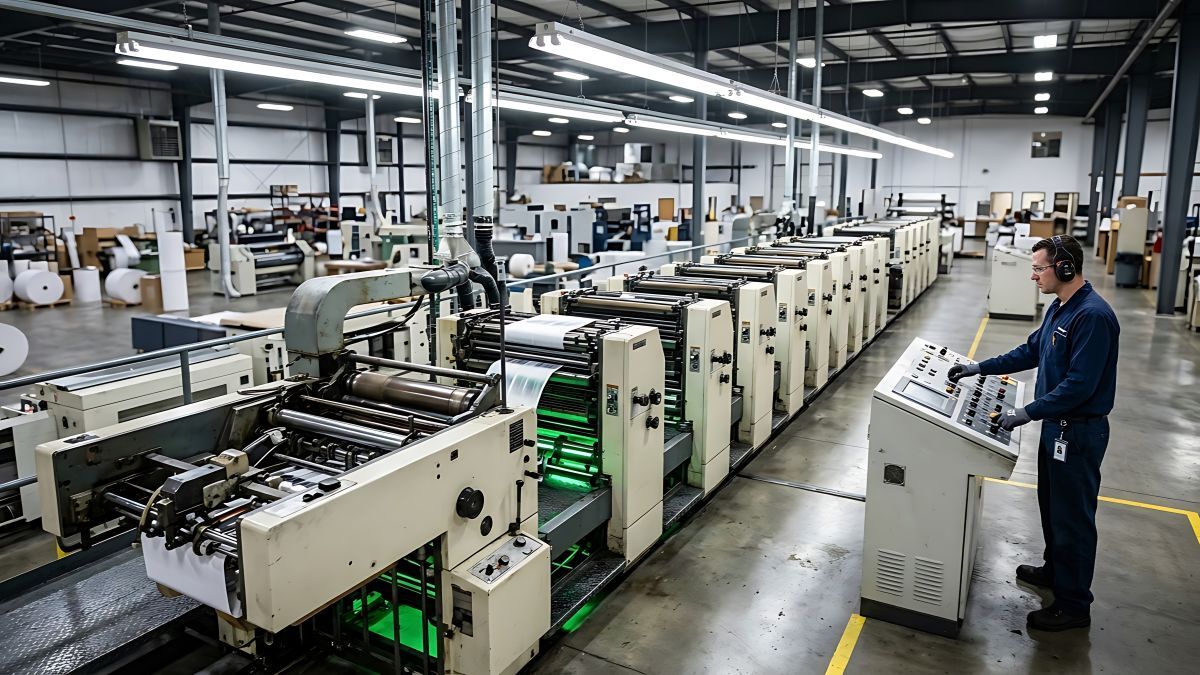
Industrial printing press operating in a manufacturing facility.

Fair Market Value (FMV) and Actual Cash Value (ACV) are two terms commonly encountered when determining the value of machinery, equipment, and other personal property. Although they may produce similar results in some situations, they are not necessarily the same.

Fair Market Value generally reflects the price at which property would change hands between a willing buyer and seller under specified market conditions. Actual Cash Value is most commonly used in insurance and generally considers the value of property at the time of a loss, often based on replacement cost less depreciation.

Understanding the difference is important because the same piece of equipment can have different values depending on the definition being applied and the purpose of the valuation.


What Is Fair Market Value?

Fair Market Value is generally defined as the amount at which property would change hands between a willing buyer and willing seller, neither being under compulsion to buy or sell, and both having reasonable knowledge of relevant facts.

In machinery and equipment appraisals, Fair Market Value is commonly used for transactions, civil litigation, tax-related matters, business acquisitions, and other purposes where an opinion of market value is required.

An equipment appraiser may consider comparable sales, dealer listings, equipment condition, age, usage, specifications, market demand, and other factors when developing an opinion of Fair Market Value.

It is also important to recognize that equipment can be valued under different premises of Fair Market Value. For example, equipment valued in continued use as part of an operating business may have a different value than the same equipment valued for piecemeal removal and sale. The appropriate definition and premise depend on the assignment.


What Is Actual Cash Value?

Actual Cash Value is a term most commonly associated with insurance policies and property loss claims.

In many insurance situations, ACV is calculated by determining the current replacement cost of the property and deducting depreciation to account for age, wear, condition, and other factors affecting its value.

For example, suppose a piece of equipment would cost $100,000 to replace with a comparable new machine. If depreciation is estimated at 40%, its Actual Cash Value under a replacement-cost-less-depreciation calculation would be $60,000.

However, Actual Cash Value does not have one universally applicable definition or calculation method. Depending on the insurance policy and applicable law, ACV may be determined using market value, replacement cost less depreciation, or other considerations.

For this reason, an appraiser involved in an insurance assignment should understand how Actual Cash Value is defined for that particular situation before developing an opinion of value.


How Are Fair Market Value and Actual Cash Value Different?

The primary difference is the basis upon which each value is determined.

Fair Market Value focuses on the market for the property and the amount a willing buyer and seller would agree upon under the applicable definition and premise of value.

Actual Cash Value generally focuses on the value of property for insurance purposes, based on the requirements of the applicable policy and legal framework.

Neither conclusion is necessarily incorrect. The values may simply reflect different definitions, assumptions, and valuation methods.


When Are Fair Market Value and Actual Cash Value Used?

Fair Market Value is commonly requested in equipment appraisals involving business transactions, ownership transfers, financial reporting, taxation, and certain lending assignments.

Actual Cash Value is more frequently encountered when machinery or equipment has been damaged, destroyed, or lost and an insurance claim must be evaluated.

However, the intended use of an appraisal does not automatically determine the appropriate definition of value.

For example, an insurance assignment may require replacement cost rather than Actual Cash Value, while a lender may request a liquidation value rather than Fair Market Value.

The appraiser should establish the appropriate definition of value at the beginning of the assignment based on its intended use, intended users, and any applicable contractual or regulatory requirements.


Can Fair Market Value and Actual Cash Value Be the Same?

Yes. In some situations, Fair Market Value and Actual Cash Value may be similar or even identical. This may occur when the applicable ACV definition specifically relies on market value.

In other situations, the two values can differ significantly.

The difference often depends on the type of equipment, its condition, the availability of comparable used equipment, the cost of replacement, the depreciation methodology, and the applicable definitions.

It is therefore important not to assume that an appraisal developed for one purpose can automatically be used for another.


The Bottom Line

Fair Market Value and Actual Cash Value are related concepts, but they are not interchangeable.

Fair Market Value generally reflects the price equipment would command in the marketplace under a specified definition and premise of value. Actual Cash Value is primarily an insurance-related concept, with its meaning and calculation dependent on the applicable policy and legal requirements.

Before obtaining an equipment appraisal, it is important to establish which definition of value is required. An experienced equipment appraiser can help identify the appropriate valuation approach and develop an opinion of value consistent with the assignment.


Common Questions

Is Actual Cash Value the same as Fair Market Value?

Not necessarily. Fair Market Value generally reflects a market transaction between willing buyers and sellers. Actual Cash Value is typically used in insurance and may be based on replacement cost less depreciation or another method required by the policy or applicable law.

How is Actual Cash Value calculated for equipment?

A common method is to estimate the current cost of replacing the equipment and deduct depreciation for age, condition, wear, and other relevant factors. However, the applicable insurance policy and legal requirements determine whether that method is appropriate.

Is Actual Cash Value the same as replacement cost?

No. Replacement cost generally reflects the cost to replace property with comparable new property, while Actual Cash Value often incorporates depreciation. The precise distinction depends on the applicable insurance terms.

Can an equipment appraisal be used for an insurance claim?

Yes, equipment appraisals can be used in insurance-related assignments. However, the appraiser must understand the applicable policy requirements and definition of value. An existing Fair Market Value appraisal may not provide the value needed for an insurance claim.

Why might the market value of equipment differ from its depreciated replacement cost?

Market value reflects what buyers are willing to pay for equipment under specified market conditions. Depreciated replacement cost begins with the cost of comparable new equipment and accounts for depreciation. Differences in demand, technology, installation, removal costs, and other factors can cause the two approaches to produce different results.


Tags: actual cash value, fair market value

Expanding the Premise of Fair Market Value in M&E Valuation

Posted by Equipment Appraisal Services on Mon, Dec 08, 2025 @ 07:29 AM

Determining fair market value of installed vs uninstalled equipment

Depending on the industry, the equipment that works within it can be relatively mobile or stationary. The more immobile assets may involve significant costs in addition to the actual purchase price of the machinery itself. These expenses include shipping, installation, project management, engineering, electrical, plumbing, and operator training. These extra investments are necessary to get the equipment up and running. For mobile assets, these variables will be much less of a factor in a potential transaction.

From an appraisal perspective, this creates the need to further define Fair Market Value beyond just the “hard” costs. Fortunately, the American Society of Appraisers (ASA) has developed definitions to consider these potential scenarios. Two of the most common are Fair Market Value-Installed and Fair Market Value-Removed. With each definition, it takes the initial premise of value and expands upon it to further clarify its parameters.

For comparison, here are the definitions as stated by the ASA:

Fair Market Value

Fair Market Value is an opinion expressed in terms of money, at which the property would change hands between a willing buyer and a willing seller, neither being under any compulsion to buy or to sell, and both having reasonable knowledge of relevant facts, as of a specific date.

Fair Market Value-Removed

Fair Market Value-Removed is an opinion expressed in terms of money, at which the property would change hands between a willing buyer and a willing seller, neither being under any compulsion to buy or to sell, and both having reasonable knowledge of relevant facts, considering removal of the property to another location, as of a specific date.

Fair Market Value-Installed

Fair Market Value-Installed is an opinion expressed in terms of money, at which the property would change hands between a willing buyer and a willing seller, neither being under any compulsion to buy or to sell, and both having reasonable knowledge of relevant facts, independent of earnings generated by the business in which the property is or will be installed, of a specific date.

The bolded words within the refined definitions provide additional perspective based on two different scenarios. For mobile assets, these values will not be much different, if at all; however, for certain types of manufacturing and processing equipment, for example, it may be significant.

If the appraiser is valuing an over-the-road truck or trailer, they would just use the premise of Fair Market Value, as installation and removal costs would not be material.

However, for a large multi-component material handling line in a processing facility, the value on an installed basis will likely be significantly higher than the removal cost. The requirements necessary to ship these types of assets, add extra foundations to install them safely, all utility line hookups needed, and potentially paying the manufacturer reps for weeks of on-site training, are some of these costs that would have value on an installed basis but not in a removed situation.

In summary, it is important for both the appraiser and the client to determine the most appropriate definition of value to use in any given situation. Communicating the purpose of the appraisal and discussing the big-picture perspective, along with the owner/buyer/lender/investor’s goals, will help determine which approach makes sense.

Tags: fair market value, fair market value - installed, fair market value-removed

Fair Market Value (FMV) vs. Actual Cash Value (ACV)

Posted by Equipment Appraisal Services on Tue, Sep 06, 2022 @ 07:30 AM


Fair Market Value Actual Cash Value Machinery Equipment Appraisals Insurance

When it comes to estimating the value of personal property and equipment, there are a number of premises, terms, and definitions thrown around in the professional appraisal realm, as well as areas such as insurance loss claims

Fair Market Value is the most frequently referenced when it comes to appraisers, however, insurance adjustors are tied to a less common term called Actual Cash Value.

Although you might think these two should be similar in their approach, they can be quite different, depending on the type of property being valued and the interpretation of their meaning.

As a direct comparison, here are the most often seen definitions:

Fair Market Value is an opinion expressed in terms of money, at which the property would change hands between a willing buyer and a willing seller, neither being under any compulsion to buy or to sell and both having reasonable knowledge of relevant facts, as of a specific date.

Actual Cash Value is the amount equal to the replacement cost (new) minus depreciation of a property at the time of loss. The actual value for which the property could be sold is always less than what it would cost to replace it.

Given there is generally room for interpretation with both of these definitions, there are times when appraisers and insurance adjustors can arrive at a very similar value and other times when there is a significant discrepancy between the two.

What approaches are utilized, and which data sources are relied upon will determine whether these values are comparable or far apart. How independent agencies measure useful life along with annual levels of depreciation, and whether they rely on direct market information or broader industry data can create any number of diverging estimates of value.

Before you select an appraiser or engage with an insurance company to protect your personal property and equipment, it is important to understand the company’s background and history with how they treat these approaches to value. Accredited appraisers have guidelines and quality controls in place by which they abide, while insurance companies will have their own internal methodologies based on past experience and actuarial data.

Regardless of these requirements, there will always be a subjective component to the concept of valuation with every business in both the appraisal and insurance industries. Seek to learn as much as you can about this topic so you can feel comfortable that the service being provided is the one that’s right for you.

Tags: actual cash value, fair market value, ASA accredited appraiser, Machinery & Equipment Appraisals, insurance

Equipment Appraisals: Fair Market Value-Installed vs Fair Market Value

Posted by Equipment Appraisal Services on Mon, May 31, 2021 @ 08:00 AM

Equipment Appraisal Fair Market Value Installed

In our last post, we discussed the most commonly used value definitions specific to bank financing and equipment leasing. In this installment, we are focusing on internal reasons for obtaining an appraisal, such as accounting, tax, and insurance compliance requirements.

Depending on the industry you work within, certain machinery & equipment can be large and complex, involving significant investments outside of the pure “hard cost” of the assets. These expenses include shipping, construction, installation, custom build-outs, and operator training, simply to get the equipment up and running.

For these reasons, the American Society of Appraisers (ASA) developed a definition of value to consider these costs as part of the overall capitalized value of the machinery. This expanded definition is called Fair Market Value-Installed and is similar to Fair Market Value with certain considerations added.

Here are the two definitions side by side, for comparison:

Fair Market Value (FMV)

Fair Market Value is an opinion expressed in terms of money, at which the property would change hands between a willing buyer and a willing seller, neither being under any compulsion to buy or to sell and both having reasonable knowledge of relevant facts, as of a specific date.

Fair Market Value-Installed

Fair Market Value-Installed is an opinion, expressed in terms of money, at which the property would change hands between a willing buyer and a willing seller, neither being under any compulsion to buy or to sell and both having reasonable knowledge of relevant facts, independent of earnings generated by the business in which the property is or will be installed, as of a specific date.

The highlighted words in the expanded definition are what allows the appraiser to include expenses, commonly referred to as “soft costs”, as a complement to the actual purchase price of the equipment. These additional investments will add value as part of the overall asset, as long as it remains installed, which is a consideration when valuing for any internal business purpose specific to your company.

Most machinery-intensive industrial manufacturing facilities and large process production plants will see these types of costs associated with their equipment. The requirements necessary to ship large assets, often overseas, add extra foundations to safely install the equipment on the facility floor, the electrical, plumbing, and process piping needed to work with the equipment, and paying the manufacturer representatives for weeks of on-site training, are some of these costs that can be capitalized as part of the overall value of the assets.

Not every business has equipment with high installation costs associated with it, but if yours does, don’t forget to consider these additional investments as part of the overall value when working on internal compliance projects related to accounting, tax, and insurance.

Tags: accredited appraisers, fair market value, Machinery & Equipment Appraisals, fair market value - installed

How to Determine Fair Market Value of Oilfield Equipment

Posted by Equipment Appraisal Services on Mon, Mar 08, 2021 @ 08:00 AM

Oil and Gas Machinery Equipment Appraisals


Your oilfield machinery is a primary driver behind the success of your business. You haven’t considered how much your assets are worth in quite some time, however, you now need to update your insurance coverage, obtain refinancing, buy or sell some equipment or even purchase a new company to keep up with growth requirements. Understanding the current market value of your oil and gas equipment is critical for all these possibilities. Obtaining an independent valuation from an experienced accredited appraiser is equally important to you and the other parties involved in the transaction.

Factors Considered in a Fair Market Value of Oil and Gas Equipment

  • Physical Deterioration: An appraiser will review the equipment, taking note of its physical condition. The old adage about never judging a book by its cover applies well to machinery appraisals for oilfield equipment. Even if an oil rig looks old and shows visible wear and tear, it is not necessarily an indication of low value. Appraisers will review the history of the equipment with you before making a value determination. Machinery that has been well maintained, with components replaced as needed, regardless of age, will likely still have significant value.
  • Replacement Cost: An appraiser will estimate how much it would cost to purchase, for example, an equivalent rig, mud pump, or service truck new, and then deduct from this cost-based typical levels of market depreciation over time.
  • Useful life: The appraiser may estimate the useful life of the machinery by reviewing the age, physical condition, and depreciation of equipment. Effective age is typically weighed more than chronological age if the equipment has been well maintained over its life.
  • Market Data: The marketplace is where all relevant information is found during the appraisal process. We will look at recent sales and listings while gathering opinions of value from third parties who buy and sell new and used equipment every day.

Appraisers will factor all of these variables into the analysis and subjectively estimate value based on their opinion of the reliability of the data. The appraisal report will summarize this process, explain the criteria under which fair market value was determined, and provide the sources relied upon to support these conclusions.

If you are considering any business plans in the immediate or longer-term future where the value of your oilfield assets is a factor in the decision making, it is well worth the time and expense to engage an independent appraisal company to complete the task. It is important to hire an appraiser who is unbiased and experienced in the valuation of these types of assets. When your business is on the line, never settle for an appraiser who doesn’t have the right credentials or may have an interest beyond appraising your machinery. Equipment Appraisal Services is the perfect place to begin your search.

Tags: machinery appraisal, accredited appraisers, fair market value, equipment valuation, oil and gas equipment