Equipment Appraisal Blog | Understanding Machinery Appraisals

What Is the Difference Between Fair Market Value and Actual Cash Value?

Posted by Equipment Appraisal Services on Mon, Oct 19, 2026 @ 07:29 AM

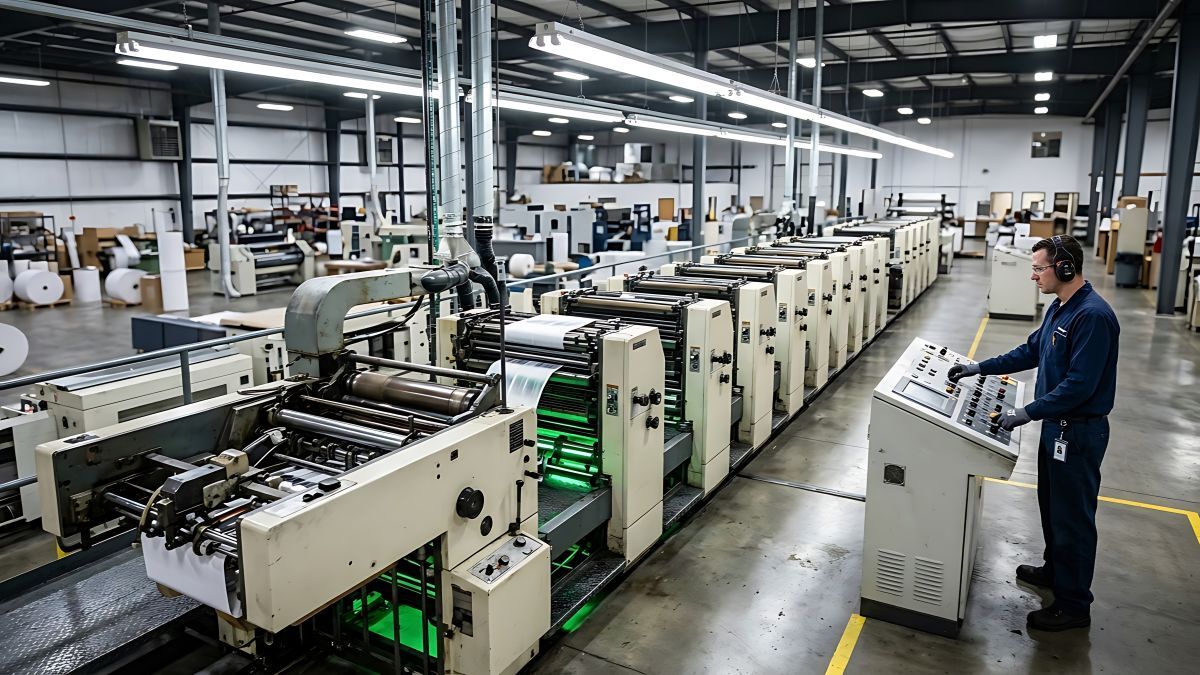
Industrial printing press operating in a manufacturing facility.

Fair Market Value (FMV) and Actual Cash Value (ACV) are two terms commonly encountered when determining the value of machinery, equipment, and other personal property. Although they may produce similar results in some situations, they are not necessarily the same.

Fair Market Value generally reflects the price at which property would change hands between a willing buyer and seller under specified market conditions. Actual Cash Value is most commonly used in insurance and generally considers the value of property at the time of a loss, often based on replacement cost less depreciation.

Understanding the difference is important because the same piece of equipment can have different values depending on the definition being applied and the purpose of the valuation.


What Is Fair Market Value?

Fair Market Value is generally defined as the amount at which property would change hands between a willing buyer and willing seller, neither being under compulsion to buy or sell, and both having reasonable knowledge of relevant facts.

In machinery and equipment appraisals, Fair Market Value is commonly used for transactions, civil litigation, tax-related matters, business acquisitions, and other purposes where an opinion of market value is required.

An equipment appraiser may consider comparable sales, dealer listings, equipment condition, age, usage, specifications, market demand, and other factors when developing an opinion of Fair Market Value.

It is also important to recognize that equipment can be valued under different premises of Fair Market Value. For example, equipment valued in continued use as part of an operating business may have a different value than the same equipment valued for piecemeal removal and sale. The appropriate definition and premise depend on the assignment.


What Is Actual Cash Value?

Actual Cash Value is a term most commonly associated with insurance policies and property loss claims.

In many insurance situations, ACV is calculated by determining the current replacement cost of the property and deducting depreciation to account for age, wear, condition, and other factors affecting its value.

For example, suppose a piece of equipment would cost $100,000 to replace with a comparable new machine. If depreciation is estimated at 40%, its Actual Cash Value under a replacement-cost-less-depreciation calculation would be $60,000.

However, Actual Cash Value does not have one universally applicable definition or calculation method. Depending on the insurance policy and applicable law, ACV may be determined using market value, replacement cost less depreciation, or other considerations.

For this reason, an appraiser involved in an insurance assignment should understand how Actual Cash Value is defined for that particular situation before developing an opinion of value.


How Are Fair Market Value and Actual Cash Value Different?

The primary difference is the basis upon which each value is determined.

Fair Market Value focuses on the market for the property and the amount a willing buyer and seller would agree upon under the applicable definition and premise of value.

Actual Cash Value generally focuses on the value of property for insurance purposes, based on the requirements of the applicable policy and legal framework.

Neither conclusion is necessarily incorrect. The values may simply reflect different definitions, assumptions, and valuation methods.


When Are Fair Market Value and Actual Cash Value Used?

Fair Market Value is commonly requested in equipment appraisals involving business transactions, ownership transfers, financial reporting, taxation, and certain lending assignments.

Actual Cash Value is more frequently encountered when machinery or equipment has been damaged, destroyed, or lost and an insurance claim must be evaluated.

However, the intended use of an appraisal does not automatically determine the appropriate definition of value.

For example, an insurance assignment may require replacement cost rather than Actual Cash Value, while a lender may request a liquidation value rather than Fair Market Value.

The appraiser should establish the appropriate definition of value at the beginning of the assignment based on its intended use, intended users, and any applicable contractual or regulatory requirements.


Can Fair Market Value and Actual Cash Value Be the Same?

Yes. In some situations, Fair Market Value and Actual Cash Value may be similar or even identical. This may occur when the applicable ACV definition specifically relies on market value.

In other situations, the two values can differ significantly.

The difference often depends on the type of equipment, its condition, the availability of comparable used equipment, the cost of replacement, the depreciation methodology, and the applicable definitions.

It is therefore important not to assume that an appraisal developed for one purpose can automatically be used for another.


The Bottom Line

Fair Market Value and Actual Cash Value are related concepts, but they are not interchangeable.

Fair Market Value generally reflects the price equipment would command in the marketplace under a specified definition and premise of value. Actual Cash Value is primarily an insurance-related concept, with its meaning and calculation dependent on the applicable policy and legal requirements.

Before obtaining an equipment appraisal, it is important to establish which definition of value is required. An experienced equipment appraiser can help identify the appropriate valuation approach and develop an opinion of value consistent with the assignment.


Common Questions

Is Actual Cash Value the same as Fair Market Value?

Not necessarily. Fair Market Value generally reflects a market transaction between willing buyers and sellers. Actual Cash Value is typically used in insurance and may be based on replacement cost less depreciation or another method required by the policy or applicable law.

How is Actual Cash Value calculated for equipment?

A common method is to estimate the current cost of replacing the equipment and deduct depreciation for age, condition, wear, and other relevant factors. However, the applicable insurance policy and legal requirements determine whether that method is appropriate.

Is Actual Cash Value the same as replacement cost?

No. Replacement cost generally reflects the cost to replace property with comparable new property, while Actual Cash Value often incorporates depreciation. The precise distinction depends on the applicable insurance terms.

Can an equipment appraisal be used for an insurance claim?

Yes, equipment appraisals can be used in insurance-related assignments. However, the appraiser must understand the applicable policy requirements and definition of value. An existing Fair Market Value appraisal may not provide the value needed for an insurance claim.

Why might the market value of equipment differ from its depreciated replacement cost?

Market value reflects what buyers are willing to pay for equipment under specified market conditions. Depreciated replacement cost begins with the cost of comparable new equipment and accounts for depreciation. Differences in demand, technology, installation, removal costs, and other factors can cause the two approaches to produce different results.

Tags: actual cash value, fair market value

What Is a Desktop Equipment Appraisal?

Posted by Equipment Appraisal Services on Mon, Oct 05, 2026 @ 07:30 AM

Equipment appraiser completing a desktop equipment appraisal from an office.


A desktop equipment appraisal is an appraisal completed without the appraiser physically inspecting the equipment. The appraiser relies on equipment lists, photographs, specifications, condition information, maintenance records, and other available documentation to identify and value the assets.


How Does a Desktop Equipment Appraisal Work?

An equipment appraiser does not always need to physically inspect equipment in order to develop an opinion of value. In such cases, they may complete a desktop appraisal.

Typically, the assignment will start with the appraiser asking for a detailed equipment list. The types of information on this list may include descriptors such as year, make, model, serial number, hours, condition, and features or accessories. The appraiser may also ask for purchase information such as price paid, date acquired, and seller.

In many cases, the appraiser will also ask for photographs of the items. For a small business, the appraiser may request pictures of every piece of equipment. For a larger business, sample photographs of high-value pieces may be sufficient. The type and quantity of items being appraised, along with the intended use of the appraisal, will help determine how many photographs are needed.

When the equipment appraiser has enough information to properly identify and analyze the equipment, they will research and appraise the items in much the same manner as if they had inspected the equipment personally.


Does a Desktop Appraisal Require an Equipment Inspection?

Just because the appraiser does not personally inspect the equipment does not mean that information about its identity and condition is unavailable. The client, equipment owner, employee, or another party may be asked to provide photographs, serial numbers, condition information, meter readings, and other information needed to complete the appraisal.

In these cases, the appraiser is relying on information provided by others rather than firsthand observations. The appraisal report should clearly disclose whether the appraiser personally inspected the equipment and identify significant information provided by others and relied upon in developing the appraisal.


When Is a Desktop Equipment Appraisal Appropriate?

A desktop equipment appraisal may be appropriate when:

    • The existence, identity, and condition of the equipment can be adequately established through available records, photographs, and other information.
    • Someone with access to the equipment is willing and able to provide information and photographs to the appraiser as requested.
    • The equipment can be readily identified and documented without requiring specialized knowledge or appraisal experience.

On the other hand, some situations call for an independent inspection completed by the appraiser or a contracted third party.

For some assignments, the intended users may want greater assurance regarding the existence, identity, or condition of the equipment. This can be particularly important in litigation, insurance claims, and certain collateral financing assignments.

In other cases, company management simply does not have the time to compile the information needed for a desktop appraisal. This is often true during acquisitions, when employees may already be overwhelmed with transition-related work and unable to devote time to an appraiser’s information requests.

Some equipment is also difficult to understand from an asset list and photographs alone. The appraiser may need to physically inspect the equipment to understand how it operates, how it is installed, its condition, or how the surrounding facility may affect its value.


Is a Desktop Equipment Appraisal USPAP-Compliant?

If properly conducted and disclosed, yes, a desktop appraisal can be conducted while meeting USPAP requirements.

USPAP allows equipment appraisers to use their professional judgment in determining the appropriate scope of work necessary to develop credible assignment results. This includes determining whether the appraiser needs to personally inspect the equipment or whether the appraisal can be completed as a desktop assignment.

USPAP requires the appraiser to disclose whether they personally inspected the equipment. When information about the equipment is provided by another party, the appraiser should disclose the scope of work performed and information relied upon in developing the appraisal.


Does a Desktop Equipment Appraisal Cost Less?

In most cases, desktop appraisals are less costly because the appraiser does not incur the travel costs and time associated with a site visit.

However, there are cases where identifying information is disorganized or unavailable, and the appraiser may have to spend more time and effort working with poor available records than if they had simply completed their own inspection. In such cases, the appraiser may choose to quote a higher fee for the desktop appraisal.


Is a Desktop Equipment Appraisal Faster?

Desktop equipment appraisals are not necessarily faster than appraisals with inspection. The information required to complete a desktop appraisal may not be readily available, and the person responsible for gathering it may not have the time or bandwidth to do so quickly.

An experienced equipment appraiser can often travel to a site, complete a full inspection, and finish the appraisal before the client or another party can find the time to complete a lengthy information request.

However, when the required information is readily available and well organized, a desktop equipment appraisal can often be completed faster than an appraisal requiring an on-site inspection.


The Bottom Line

A desktop equipment appraisal can be an efficient alternative to an on-site appraisal when sufficient information is available to properly identify and evaluate the equipment. Whether a desktop appraisal is appropriate depends on the equipment, the quality of the available information, the intended use and users of the appraisal, and the circumstances of the assignment.

An experienced equipment appraiser can help determine whether a desktop appraisal is appropriate or whether an on-site inspection is warranted.


Common Questions

What information is needed for a desktop equipment appraisal?

At a minimum, the appraiser will typically need an equipment list containing enough information to identify the assets being appraised. Depending on the equipment and assignment, this may include the year, manufacturer, model, serial number, hours or mileage, condition, features, accessories, and photographs. Purchase records, maintenance information, and other documentation may also be useful.

Can equipment be appraised from photographs?

Yes, photographs can provide important information about equipment type, configuration, condition, features, and accessories. However, photographs alone may not provide enough information to complete an appraisal. The appraiser will typically use photographs together with an equipment list and other available information.

Is a desktop equipment appraisal as reliable as an on-site appraisal?

A desktop appraisal is not inherently less reliable than an appraisal involving an on-site inspection. The important question is whether the appraiser has sufficient reliable information to properly identify and evaluate the equipment. If important information about the assets cannot be established without an inspection, a desktop appraisal may not be appropriate.

Can a desktop equipment appraisal be used for financing?

In many cases, yes. Whether a desktop appraisal is acceptable for a financing assignment depends on the lender’s requirements, the equipment being appraised, and the circumstances of the assignment. Some lenders may require an on-site inspection, particularly when equipment identification, existence, or condition is an important concern.

When is an on-site equipment appraisal better than a desktop appraisal?

An on-site appraisal may be preferable when equipment records are incomplete, the assets are difficult to identify, condition is particularly important, the installation affects value, or the intended users require independent verification of the equipment.

Tags: desktop appraisal, inspection