
Equipment Appraisal Blog | Understanding Machinery Appraisals

The Role of Equipment Appraisers as Expert Witnesses in Legal Disputes

Posted by Equipment Appraisal Services on Mon, May 26, 2025 @ 07:30 AM

Equipment & machiinery appraiser as an expert witness in court

When legal disputes involve machinery and equipment, one often overlooked yet critical player is the appraiser. These professionals bring both valuation experience and the credibility needed to serve as expert witnesses in court. Their opinions can have an impact on the overall value differential involved with a case.

Typically, an appraiser is engaged by one side involved in the dispute and/or their legal counsel. However, the valuation is completed objectively, without bias, and with the courts' support to facilitate an outcome. An accredited appraiser with experience in these types of situations should be sought out, as they will provide a supportable, defensible opinion of value along with a qualified report.

Equipment appraisers do more than just assign values when acting as expert witnesses. Their conclusions are based on methodologies that meet the Uniform Standards of Professional Appraisal Practice (USPAP) or other recognized guidelines. Their reports should withstand legal scrutiny and are often central to a case's financial arguments.

Testifying in depositions and court proceedings allows appraisers to explain valuation processes in clear, accessible terms to judges, attorneys, and juries. Under cross-examination, a credible expert can maintain composure under pressure, defending their conclusions with experience and knowledge.

Situations that commonly call for expert appraisal testimony include litigation over business value or asset division; estate settlement; divorce dissolution; damage claims involving machinery (fire, flood, accidents); bankruptcy; investor buyout conflicts; tax court proceedings; and asset liquidation.

Not all appraisers are suited for the courtroom. A dependable expert witness should have professional designations (e.g., ASA, CEA, or other relevant credentials); experience in providing equipment appraisals across a broad range of industries and markets; strong communication skills, both in writing and verbal testimony; and a history of legal experience, including depositions and trial appearances.

Hiring a qualified equipment appraiser as an expert witness can add substantial credibility to a legal case. Their insight helps courts make informed decisions, especially when significant tangible investment is involved, and parties are far off in their internal assessments. If you are facing a legal matter involving machinery or equipment, consulting and engaging with an experienced appraiser early can save time, money, and frustration down the line.

Tags: Expert Witness, Machinery Appraisal Business Dispute

Equipment Appraisals: Why Quality Trumps Price Every Time

Posted by Equipment Appraisal Services on Mon, May 12, 2025 @ 07:30 AM

Machinery and equipment appraisal report completed by a professional valuation expert

When considering an updated equipment appraisal for your business’s tangible assets, it’s easy to fixate on cost. However, the value of your machinery and FF&E directly affects your bottom line, therefore, cost should not be the number one concern. Reliability should be the driving factor. Appraisal professionals know that a high-quality report is much more valuable than one conducted by an uncredentialed, inexperienced “competitor.”

A lot goes into completing an equipment appraisal behind the scenes that should be documented and presented clearly in a final appraisal report. From data gathering, research, analysis, and report writing, all of these steps go into a high-quality valuation.

Consistent communications and timely deliverables also come with paying more for a quality valuation and engaging with an accredited appraiser. Every business owner should feel comfortable that they are in good hands and can “rest easy” knowing that the job will be completed at the highest level of satisfaction. You simply won’t get this type of service with a cheaper company that uses less experienced employees who don’t have the same skill set.

If you’re presenting your appraisal to a potential lender, insurer, investor, or buyer, they will recommend using someone with the proper credentials and expertise to support their goals. Certified equipment appraisers use industry standards and have the education and experience to properly research, analyze, and prepare a detailed report that will satisfy all requirements. The most qualified valuation professionals should also be able to verify their experience as expert witnesses working with the courts, auditors, and even the IRS in the defense of their opinions.

In summary, although you may pay a bit more to have a high-quality appraisal completed for your machinery and equipment, the extra cost will be more than offset by the reliability of the end product, which can be used to accomplish any number of goals you may have as a business owner. When considering engaging with a professional, take the time to understand why the cost is more than the less expensive option. Then, ask the company providing the cheap option how quality will be factored into their valuation. If the answer is vague, it’s likely a sign that they will not deliver the type of report you need to get your goals accomplished.

Tags: Machinery & Equipment Appraisals, Equipment Appraisal Services

Current Challenges for Used Equipment Resale Markets

Posted by Equipment Appraisal Services on Mon, Apr 28, 2025 @ 07:30 AM

Used equipment with shifting resale value

The used equipment resale market in 2025 is navigating a complex landscape shaped by economic pressures, shifting demand, and evolving inventory dynamics. Let’s look at online industry-sourced summary material for three common equipment resale market sectors to discuss this further:

Construction Equipment

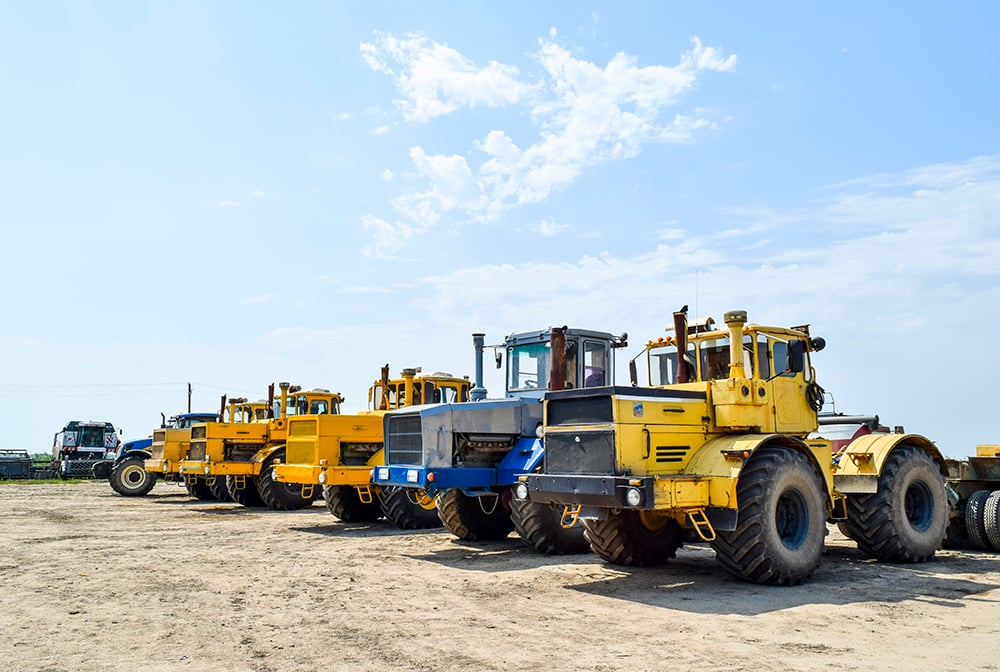
The construction sector is witnessing a notable increase in used equipment inventory. This surplus contributes to a downward trend in asking prices. That being said, the non-residential construction segment remains robust, bolstered by substantial investments in infrastructure projects. This ongoing demand is helping to stabilize the market for larger machinery, even as smaller equipment categories face pricing pressures.

Agricultural Equipment

The agricultural equipment market has been grappling with economic headwinds. High interest rates and declining farm incomes have led to decreases in new equipment sales, with projections indicating further decline in 2025. Consequently, farmers are increasingly hesitant to invest in both new and used machinery.

This cautious approach has resulted in rising inventories of used equipment. The oversupply is exerting downward pressure on prices, with auction values for certain categories of tractors dropping on a year-over-year basis.

Heavy Trucks and Transportation

The heavy-duty truck market is undergoing adjustments due to shifting freight demand and evolving fleet strategies. Inventory levels for sleeper trucks have decreased while day cab inventories are rising. These changes reflect a realignment in fleet compositions to adapt to current market conditions. Despite these inventory shifts, auction values for heavy-duty trucks are on the decline. This trend indicates ongoing recalibrations in the transportation equipment sector.

In summary, sellers in these markets may need to consider developing dynamic pricing strategies while leveraging online platforms to reach a broader audience. Emphasizing the value proposition of well-maintained used equipment can also attract cost-conscious buyers.

Purchasers may be able to acquire quality equipment at competitive prices, however, due diligence is essential to ensure the machinery meets operational needs and provides long-term value.

Staying abreast of economic indicators and industry developments will be vital for all participants. Adaptability and careful planning will be key to facing the challenges and capitalizing on the buy/sell opportunities that 2025 presents.

Tags: equipment values, used equipment

Why Certified/Accredited Desktop Equipment Appraisals Are Supportable

Posted by Equipment Appraisal Services on Mon, Apr 14, 2025 @ 07:30 AM

Certified/accredited desktop machinery and equipment appraiser

When it comes to equipment valuation, accuracy, reliability, and compliance are everything. Whether the purpose is for refinancing, acquisition, buy/sell, tax/accounting, insurance, or litigation support, the appraisal needs to stand up to scrutiny. Traditionally, on-site inspections were seen as the gold standard; however, in today’s fast-paced, tech-enabled world, desktop equipment appraisals are considered to be highly supportable, efficient, and cost-effective.

These appraisals should be conducted by individuals who hold designations from recognized organizations like the ASA, AMEA, or NEBB Institute. This means you are not just getting a quick estimate but a compliant, USPAP-adherent (Uniform Standards of Professional Appraisal Practice) valuation prepared by an expert with proven credentials.

Desktop appraisals rely on the same rigorous valuation principles as those conducted with an on-site field visit. They will leverage current market comparables, replacement costs, useful life, market-derived depreciation, industry trends, and proprietary databases to deliver a well-supported and defensible report.

One of the key factors in supporting a desktop appraisal is the quality of client-provided data. Ensure you supply the valuation expert with accurate, detailed specs, along with photos and supporting documentation such as invoices, purchase orders, and capitalized asset records.

In cases where timing is critical, such as financing deadlines, purchase, and sale, or asset management, a desktop appraisal offers a faster turnaround without compromising the quality or supportability of the final report. Lenders, attorneys, accountants, and auditors increasingly recognize this format as credible and practical.

No travel means lower costs. For organizations with multiple locations or large inventories, desktop appraisals allow for scalable solutions without the logistics and expense of on-site inspections. Yet, they still provide comprehensive documentation and full USPAP compliance, making them suitable for formal reporting purposes.

In summary, a certified desktop equipment appraisal is not a shortcut, it is a streamlined solution that blends professional expertise with market accuracy and practical efficiency. So long as it is prepared by a qualified appraiser and based on reliable data, it is every bit as supportable and defensible as its on-site counterpart.

There will certainly be instances where an on-site valuation will be preferred or even required. Consider your specific needs and budget when discussing valuation options with a credentialed appraiser. Ask them to provide both a desktop and on-site option and make an informed decision that works best for you.

Tags: desktop appraisal, supportable

Equipment Appraisals for Donation Purposes

Posted by Equipment Appraisal Services on Mon, Mar 31, 2025 @ 07:30 AM

machinery and equipment donation appraisals

Donating equipment to a charitable organization and other non-profits such as universities is a generous act that can provide significant benefits to both the donor and the recipient. However, to maximize the benefits of such a donation, it is important to understand when and why independent equipment appraisals will be required come tax time.

The IRS requires a determination of the market value of the items that are being donated. If the claimed value of the donated equipment exceeds $5,000, a qualified appraisal is required to substantiate the deduction.

First, determine if an appraisal is necessary based on discussions with your accountant and/or your own internal estimate of value. Then, research and select an accredited appraiser who is familiar with these types of valuations. The IRS requires that the appraisal be conducted by a qualified professional with experience in valuing machinery and equipment for donation purposes.

The valuation expert will request a copy of all information available regarding the purchase and usage history of the assets. The more detail available for the appraiser to review from your records, the more supportable and reliable the appraisal will be.

The appraiser will then complete their research and analysis and provide you with a detailed report that meets IRS standards, including detailed descriptions, methodologies, and approaches considered and relied upon. Fair Market Value is the standard definition used and accepted by the IRS. It represents a hypothetical arm’s length transaction with neither the buyer nor seller being under any compulsion to buy or sell and both fully knowledgeable of all relevant facts.

Once you are ready to file your taxes, you must complete IRS forms, including an 8283 (Noncash Charitable Contributions) when filing tax returns. For donations exceeding $5,000, the appraiser must sign Section B of Form 8283 to verify the valuation.

For your records, maintain the documentation as part of your tax file, including copies of the appraisal report, donation receipt from the charity, and any related correspondence. Ensure the charity provides a written acknowledgment of the donation.

In summary, equipment donations can be beneficial to both donors and their recipients. To maximize the tax benefits and ensure compliance with IRS regulations, seek professional appraisal services when necessary. Proper documentation and adherence to IRS guidelines will make the donation process smooth and rewarding. Before donating, consult with a tax professional to ensure compliance with the latest tax laws to optimize the benefits of your contribution.

Tags: donation appraisal, equipment donations