
Equipment Appraisal Blog | Understanding Machinery Appraisals

How A Medical Equipment Appraisal Can Help Your Practice Get Ahead

Posted by Equipment Appraisal Services on Mon, Apr 01, 2019 @ 08:00 AM

Medical M&E Appraisal

Today's healthcare practice is facing any number of challenges on a daily basis. No-shows for appointments, changes to EHR and HIPPA practices, new treatments and medications, and an endless sea of patients who need to be seen as quickly as possible. Having the right tools can make a huge difference in how efficiently your practice operates, but many physicians and practice managers aren't quite sure how to make those changes effectively. Fortunately, something as simple as a medical equipment appraisal can make a huge difference in your practice's bottom line. Here's how.

How Medical Equipment Appraisal Can Help Your Practice Get Ahead

To start, what does your practice need to have to improve efficiency and patient outcomes? Is it new equipment that works well with your EHR system and digitization strategy? Maybe it's a new EHR suite that takes your interoperability to a whole new level. A new location to spread your practice's influence and make it easier for patients to reach you? What about social responsibility obligations to organizations such as Doctors Without Borders?

 To make these changes happen, you need to invest capital. But how much capital do you actually have? Are your assets listed accurately in the books, or are there discrepancies that could cause your practice serious issues down the road? This is one of the reasons why having an appraisal performed on your medical equipment can be so very beneficial to your practice. If you don't know the value of your equipment, will you get a good deal on new equipment or be taken advantage of? Can you secure loans for that new EHR suite or location without knowing those values? What will the value of your equipment donation to charitable organizations actually end up being and how will it impact your bottom line?

When you have a professional appraisal performed by a certified equipment appraiser, you're gaining much more than the knowledge of the value of your medical equipment. You're receiving the calculated opinion of a professional who is well-versed in medical equipment and understands the many nuances of your industry. They're able to then provide you with a carefully crafted report that will not only document your equipment's value, but can serve as a valuable tool in its own right.

Because a certified equipment appraiser has been taught to use standardized methodologies that have been well-tested in a wide range of real-world circumstances, the report that they prepare is able to stand up to strong scrutiny in financial, insurance, legal and tax agency circles. Having this verified information available quickly will make it much easier for you to document equipment value for a loan, an insurance claim, a court case, a tax appeal, a sale negotiation and many other circumstances you may not have considered yet.

By taking the time to have a medical equipment appraisal performed on your practice's machinery, you can take advantage of the equity in that equipment to improve your practice, whether through selling the machinery to upgrade your practice's capabilities, securing a loan for EHR upgrades or adding accuracy to your balance sheet to provide peace of mind and better accountability. However, these advantages can only be realized when you use a certified equipment appraiser to go over your practice's assets. They have the knowledge and experience to ensure that the final values you are presented with are accurate and the report generated useable for your future needs.

using market data under the cost approach

Tags: Valuing Medical M&E

5 Reasons to Get an Equipment Appraisal for Tax Purposes

Posted by Equipment Appraisal Services on Fri, Mar 22, 2019 @ 08:00 AM


Equipment Appraisal for Tax Purposes

When you're dealing with tax issues, getting an appraisal for tax purposes can quickly help you to clear up any problems with the value of your equipment.  However, that's not the only reason you should get an equipment appraisal done at that time! Appraisals provide you with a world of other benefits as well, many of which you may not have considered. Here's a quick look at some of the reasons you should get an equipment appraisal when dealing with a tax issue.


5 Reasons to Get an Equipment Appraisal for Tax Purposes

  1. To prove value. Is your equipment worth what the book says, what the sale magazine says or what eBay says? It may be none of the above. Your equipment is in a specific condition and has a particular expected useful lifespan that can't be quickly be determined by simply looking at another piece of machinery. It takes years of experience and training to understand the full intricacies of equipment value.
  2. To fight a bad appraisal. If you're dealing with a tax issue, there's a good chance it's a bad tax appraisal. Tax assessors need to estimate value on a wide range of items, not just your equipment, and they often do that job badly. Fortunately, they'll virtually always listen to the opinion of a certified equipment appraiser, and if they won't, the appeals board will.
  3. To have a record of depreciation over time. How much value has your equipment lost since you purchased it? Knowing this information is vital not only on your tax paperwork, but also to the assets that you have on your books. It's hard to make a solid business decision when your books and balance sheet are not completely accurate, but an appraisal helps you sort out this issue.
  4. To get a timeline on replacement. Should you budget to replace that equipment this year, next year or in five years? It's really hard for most people to estimate the remaining useful lifespan of a piece of equipment, but machinery appraisers do it every day. They can also help point out potential repairs that may lengthen that lifespan, buying you precious time to get a little more income before the big investment.
  5. To have on hand for future uses. An equipment appraisal gives you proof of value and when prepared by a certified equipment appraiser, uses tested methodologies that will hold up in court, at your financial institution, with your insurance company, when selling machinery and in a number of other situations. By having one on hand that is recent, you can deal with a whole world of potential issues quickly and easily.

Getting a machinery appraisal for tax purposes is an excellent idea, especially when dealing with a tax assessment that was inaccurate. But as you can see, it's not the only good reason for getting an equipment appraisal performed. Knowing the actual value of your machinery gives you a solid basis for any number of business ventures, and having that value calculated by a certified equipment appraiser gives you a strong position for many future issues you may run into. The report that is generated by a certified appraiser will hold up well not only with tax agencies, but also with financial institutions, court systems and any number of other situations. 

Tags: Equipment Appraisal for Tax Purposes

How Does a Machinery Appraisal Factor into a Business Dispute?

Posted by Equipment Appraisal Services on Fri, Mar 08, 2019 @ 08:00 AM

business_dispute_asset_appraisal

Whether you're dealing with an estate, the breakup of a partnership or a lawsuit, a business dispute appraisal can provide you with tools to prove the value of your equipment from those who would inflate or deflate its value for their own benefit. But exactly how does this type of appraisal impact your machinery value and how does it benefit your side of the situation? Here's a quick look to help you get started.

How Does a Machinery Appraisal Factor into a Business Dispute?

Let's take a look at a few situations in which a business dispute appraisal may help you prove the value of your assets. This doesn't mean that the appraiser will automatically provide you with a higher or lower figure than the other side, just one that has been calculated fairly using tested, standardized methodologies:

  • A nasty divorce is pitting two sides of a business against each other. One person wants out, the other wants to keep the company. The one who wants out wants top dollar for the years they put into the business, and isn't afraid to inflate the company's value and the value of its machinery assets. The one who is staying with the company resents this manipulation and therefore wants to only pay a fair market value. This could also be the other way around, with the individual who is leaving the business only wanting what's fair while the one staying with the company deliberately lowballing the value of the business and its equipment assets. A dispute appraisal determines the actual value of the equipment.
  • When a long-run business suddenly loses its owner to a heart attack or car accident, the family is suddenly faced with splitting up the business. However, some family members are willing to wait for the right buyers at a higher price while other family members want to quickly liquidate the equipment and assets in order to get on with their lives instead of dragging out the entire process. How do you determine the fair value to make everyone as happy as possible? A dispute appraisal looks at the entire situation and helps determine what would be a fair value all the way around.
  • Tragedy strikes, and a worker is killed on the job at your construction site. The surviving family members sue your company, going after everything they can in their pain, and are determined to take it all. They know a little about the industry and have seen equipment like yours go for a lot of money. But what they don't understand is that your equipment is headed towards end of life or was used and abused rather badly during that fast-track project a couple years ago. How do you prove to them what the value of your machinery really is? A dispute appraisal.

By starting out with a solid grasp of your equipment's value, a business dispute appraisal gives you the verified information you need to fight for your rights in any number of different situations. However, not every person who represents themselves as an appraiser can provide you with the solid calculations and tested methodologies you need to get the job done. Make sure that you only work with a professionally-certified appraiser who has experience in your industry as well as with valuation disputes.

Tags: Machinery Appraisal Business Dispute

Equitable division of assets and divorce appraisal of equipment

Posted by Equipment Appraisal Services on Fri, Feb 22, 2019 @ 08:00 AM

equipment_appraisal for divorce

For business owners, creating an equitable division of assets during a divorce means taking the value of existing equipment into account. Since divorces can be contentious matters, there are a few considerations to keep in mind when planning to get equipment appraised before a divorce. 

What to Expect in a Divorce Appraisal

During a divorce, couples must split all marital assets. Just as the couple will need to divide the house and the cars, a divorcing couple with a business must divide the company's assets.

Circumstances vary, but a general rule of thumb is that anything owned by one party before the marriage does not count as a marital asset, thus is exempt from being split. Any property, personal or business, acquired after the marriage counts as a marital asset and must be shared. So if one person owned a van before getting married, they maintain ownership of the van, but if the van was acquired as a company car after the wedding, its value must be split. 

In order to divide assets fairly, the couple must agree on their worth. While it's relatively easy to get a valuation of a van using Kelly Blue Book or the equivalent, it's not so easy to get the valuation of business assets. That's where an appraiser comes in: A qualified appraiser can examine the company's equipment and calculate value, so the couple can move on with the division of marital assets. 

After all of the equipment has been valued, lawyers can determine how to split all of the couple's assets equitably. In some cases, one party may want to buy the other party out of their share of business assets. Other times, the business owner may decide to sell off certain assets, then give the proceeds to their ex. A third option is to retain business assets and give the ex a greater share of personal assets. 

Divorce Appraisal Concerns 

Maintaining fairness can be difficult in a divorce, as emotions run high on both sides. Sometimes, one party can be tempted to hide assets as a way to punish their soon-to-be ex. Even when both sides are playing fair, the lower-earning spouse can worry about whether they are really receiving everything they're entitled to by law. For this reason an appraisal list, which lists all company equipment to be valued, can guide the process. Once both sides have agreed to the list, the appraisal can move ahead. It's key to select an appraiser who is experienced with divorce appraisals and taking equipment valuations. If things aren't valued correctly, then both sides are harmed.  

Once an appraiser has been chosen, they will value all equipment. An appraiser might take a market approach to equipment valuation, which examines recent sales prices of similar items. This approach is best for common items, since data is available.

The cost approach works well in the absence of recent sales data. In this valuation method, the appraiser determines how much it would cost to replace the equipment new, and then subtracts value lost due to depreciation or obsolescence. To accurately assess how much value the existing equipment has lost, the appraiser may need maintenance records, purchase receipts, and other data. 

Business owners or their spouses who are undergoing a divorce should identify an experienced appraiser early on, so there's a lead time in which the appraiser can get valuation. Our equipment appraisers can work with one spouse, both parties, and their attorneys to develop a divorce appraisal that is objective, so marital assets may be split equitably. 

Tags: Equipment Valuation in a Divorce Proceeding

Accurate Equipment Appraisals Help Move Material Handling Equipment

Posted by Equipment Appraisal Services on Mon, Feb 11, 2019 @ 08:00 AM

material handling

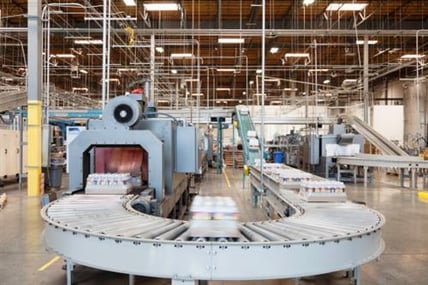
Manufacturers, construction companies, warehouses, distribution centers and many other businesses often rely on material handling equipment to manage the heaviest of loads. This equipment helps in the movement, storage, and control of a company’s goods and parts throughout the production and delivery cycles. It speeds up the entire process, reduces labor costs, and enables the safe transportation of items from one place to another.

Sometimes a business will need to sell or physically move the material handling equipment to another location due to a pending sale, consolidation, expansion, or other business transaction. This may require putting a fair value on the equipment for insurance, legal and possible tax purposes. That is when it is time to call in a material handling equipment appraiser who can provide an accurate, legally defensible estimate of the value of the equipment in accordance with the guidelines and Uniform Standards of Professional Appraisal Practice (USPAP). The different types of handling equipment can be classified into four major categories:

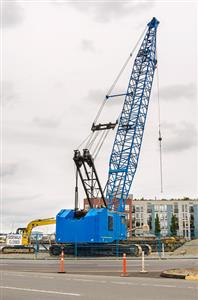
  • Transport Equipment: This equipment moves material from delivery to storage or a work area, between workplaces, and to the loading dock. This might include engineered or robotic storage and retrieval systems, heavy-duty equipment like conveyors, cranes, forklifts and industrial trucks, or manual equipment such as hand trucks, pallet jacks and dollies.
  • Positioning Equipment: This equipment manipulates materials in one location to make it easier for work to be completed on the item. Some examples would include hoists, tilt tables, balancers and industrial robots.
  • Unit Load Formation Equipment: This equipment helps to keep a load together in some manner for transport or storage. This type of equipment includes skids and pallets, cartons, bins and baskets, and crates.
  • Storage Equipment: This equipment is typically found in warehouse environments where materials are stored while they wait to be used in the production process or transported to another destination. Examples of this type of equipment include the various racks, frames, shelves, bins and drawers used to hold goods, stack loads, and provide easy access to parts.

To place an accurate value on the material handling equipment, the appraiser looks at several key factors such as its brand name, age, and adaptability for use in multiple industries. These elements must be balanced against the actual condition of the equipment to accurately determine how much potentially useful life remains in it. When arriving at a fair value, the appraiser might assess an older piece of equipment that has been well-maintained at the same amount as a newer piece of equipment that experienced heavy wear and tear. Accurate maintenance/ repair records and logs of environmental conditions can help tremendously in this phase of the appraisal.

The appraiser will also assess the likelihood of whether a potential buyer will be able to obtain necessary parts to repair the equipment down the road. Any additional features or upgrades might increase the appraisal value as well. In general, the appraiser is trying to determine how much benefit a potential buyer can expect so a dollar amount can be placed on the equipment.

A Certified Equipment Appraisal Report can safely be relied on by potential buyers, banks, lenders, accountants, and attorneys as an honest representation of what the material handling equipment is worth. This can help in making key decisions as to whether or not to invest in buying a particular piece of equipment. If your business is thinking about moving material handling equipment, look for the services of an accredited appraiser.

Tags: Appraising Material Handling Equipment